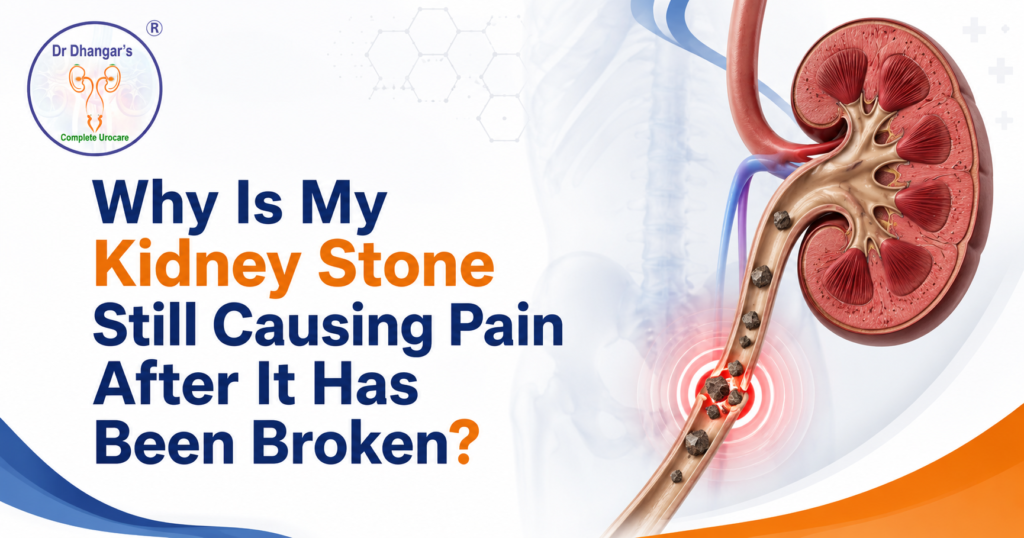
Having a kidney stone broken can feel like the end of a painful journey. However, some people are surprised when the pain continues even after a procedure such as shock wave lithotripsy or laser stone treatment. This does not always mean the treatment has failed. In many cases, the stone has been broken into smaller pieces that still need to move through the urinary tract.
If you are searching for an Urologist in swargate Pune, understanding why pain can continue after stone treatment can help you know what is normal, what requires follow-up, and when you should seek urgent medical attention. A Kidney Stone Specialist can determine whether your symptoms are due to passing fragments, a remaining stone, a ureteral stent, or a complication requiring further treatment.
According to the National Institute of Diabetes and Digestive and Kidney Diseases (NIDDK), treatments such as shock wave lithotripsy break kidney stones into smaller pieces so they can pass through the urinary tract.
Why Can a Kidney Stone Still Hurt After Being Broken?
Breaking a stone does not necessarily mean every fragment leaves the body immediately. Depending on the size, location and composition of the original stone, fragments may take time to pass.
The European Association of Urology (EAU) explains that residual fragments can remain after shock wave lithotripsy, ureteroscopy or other stone procedures. Some fragments may require additional treatment depending on their size, location and symptoms.
1. Small Stone Fragments Are Still Passing
This is one of the most common explanations.
When a kidney stone is broken into smaller pieces, those fragments need to travel from the kidney through the ureter and eventually into the bladder. As fragments move through the ureter, they can cause pain similar to the original stone.
The pain may:
- Come and go in waves
- Move from the back or side toward the lower abdomen or groin
- Be associated with urinary urgency or discomfort
- Occur along with a small amount of blood in the urine
NIDDK lists sharp pain in the back, side, lower abdomen or groin as a typical symptom of kidney stones. Pain may also come and go in waves.
So, experiencing some discomfort after stone fragmentation does not automatically mean that the procedure was unsuccessful.
2. A Larger Fragment May Be Stuck in the Ureter
Sometimes fragments do not pass easily. A relatively large fragment can become lodged in the ureter and interfere with urine flow.
This can create pressure in the urinary system and cause significant pain. Depending on the circumstances, the doctor may recommend observation, medication to help fragment passage, or another procedure.
The EAU describes steinstrasse, a condition in which multiple stone fragments or stone gravel accumulate in the ureter and can interfere with urine flow. It occurs in about 4% of cases following shock wave lithotripsy according to the guideline.
If fragments are causing obstruction or persistent symptoms, further treatment may be required.
3. Some of the Original Stone May Remain
A stone being “broken” is not necessarily the same as being completely removed.
The effectiveness of fragmentation can depend on factors including:
- Stone size and location
- Stone composition or hardness
- Patient anatomy
- Type of treatment used
- Position of the stone
The EAU notes that stone characteristics, including composition and density, influence the effectiveness of shock wave lithotripsy.
Some patients may therefore need follow-up imaging to determine whether they are completely stone-free or whether fragments remain.
4. A Ureteral Stent May Be Causing the Discomfort
If you underwent ureteroscopy or another stone procedure, your urologist may have placed a temporary ureteral stent.
A stent is a thin flexible tube that helps urine flow from the kidney to the bladder while the urinary tract heals or while fragments pass.
However, the stent itself can cause discomfort.
According to NIDDK, people with a temporary ureteral stent may experience pain or discomfort around the kidney or bladder, as well as increased urinary frequency and urgency. These symptoms can continue while the stent remains in place.
If you have a stent, ask your urologist how long it is expected to remain and when it should be removed. Never attempt to remove a stent yourself unless your medical team has specifically instructed you to do so.
5. Irritation and Swelling Can Take Time to Settle
The urinary tract can become irritated after a stone procedure. Passing fragments through the ureter can also temporarily irritate its lining.
As a result, some patients may experience discomfort even after the main stone has been fragmented or removed.
However, pain that is severe, persistent or getting worse should not simply be assumed to be normal recovery. Your doctor may need to determine whether a fragment remains, whether urine flow is obstructed, or whether another problem has developed.
When Is Pain After Kidney Stone Treatment Concerning?
Some discomfort can occur during the recovery period, but certain symptoms require prompt medical evaluation.
Seek medical attention promptly if you develop:
- Fever or chills along with kidney or urinary pain
- Severe or worsening pain that does not improve with prescribed treatment
- Difficulty or inability to urinate
- Heavy bleeding or blood clots in the urine
- Persistent vomiting or inability to keep fluids down
NIDDK advises seeking medical care for kidney stone symptoms such as severe pain, urinary problems, bleeding, fever or chills.
After ureteroscopy, NIDDK specifically advises contacting a healthcare professional for fever with or without chills, inability to urinate, bright red urine or blood clots, persistent painful urination, or severe discomfort.
A blocked urinary system combined with infection can become particularly serious and requires urgent treatment.
How Does a Kidney Stone Specialist Find the Cause of Persistent Pain?
If your pain continues after treatment, your doctor may review the original stone size and location, the procedure performed, medications, and whether a stent was inserted.
Depending on your symptoms, follow-up may involve urine and blood tests or imaging.
Imaging can help determine whether:
- Stone fragments remain
- A fragment is blocking the ureter
- The kidney is swollen because of obstruction
- Another stone is present
- The urinary tract requires additional treatment
The appropriate test depends on your individual circumstances. Your doctor may use ultrasound, X-ray or CT imaging when clinically appropriate.
NIDDK explains that kidney stone treatment decisions depend on factors such as the stone’s size, location and type.
Does Persistent Pain Mean You Need Another Procedure?
Not necessarily.
Some small fragments can pass naturally, while other situations require additional intervention. The decision depends on the size and location of the remaining stone or fragments, symptoms, obstruction, infection and overall health.
The EAU guidelines note that residual fragments can remain after stone treatment and may require additional intervention in some patients.
If a fragment is too large to pass or is causing significant obstruction, your urologist may discuss another procedure such as ureteroscopy or additional shock wave treatment. For larger or complex stones, other approaches may be considered.
The goal is not simply to perform another procedure. It is to determine the safest and most effective way to achieve stone clearance while protecting kidney function.
What Should You Do While Recovering?
Follow the specific instructions given by your urologist because recovery recommendations can vary depending on the procedure and your condition.
Your doctor may recommend appropriate pain medication and fluid intake. However, do not force large amounts of fluid if you have severe pain, vomiting, reduced urine output or suspected urinary obstruction without medical advice.
If you have been asked to collect passed stone fragments, doing so can allow the stone to be analyzed. NIDDK notes that stone analysis can help determine the type of kidney stone and guide future prevention strategies.
Follow-up is also important. Feeling better does not always prove that every fragment has passed.
How Can You Reduce the Risk of Another Kidney Stone?
Treatment should not end with removing or breaking the current stone. Understanding why the stone formed can help reduce the chance of recurrence.
Depending on your medical history, your doctor may recommend stone analysis, blood tests or a 24-hour urine evaluation. NIDDK explains that 24-hour urine testing can assess urine volume and mineral levels that may contribute to stone formation.
Prevention strategies are personalized because different types of kidney stones have different causes.
Final Thoughts
Pain after a kidney stone has been broken does not necessarily mean something has gone wrong. The discomfort may occur because small fragments are still passing, the urinary tract is irritated, a residual fragment remains, or a ureteral stent is causing symptoms.
However, persistent or severe pain deserves proper evaluation. A blocked ureter, infection or significant residual stone may require prompt treatment.
If your pain continues after lithotripsy or another kidney stone procedure, do not simply wait for it to disappear. A follow-up consultation and appropriate imaging can help determine whether the stone has cleared and whether further treatment is needed.
Expert Kidney Stone Care With Dr. Sanjay Dhangar
Dr. Sanjay Dhangar provides urological evaluation and treatment for patients dealing with kidney stones, persistent stone-related pain and problems following stone procedures. A detailed assessment can help identify residual fragments, urinary obstruction or other causes of ongoing discomfort and determine the most appropriate treatment.
If you are experiencing continued pain after a kidney stone has been broken or treated, timely evaluation can help prevent complications and provide clarity about your recovery.
For patients looking for a Kidney Stone Specialist in Pune, Dr. Sanjay Dhangar can provide personalized guidance for diagnosis, stone management, follow-up and prevention.
Hashtags:
#KidneyStone #KidneyStones #KidneyStoneTreatment #KidneyStonePain #Urology #Urologist #KidneyHealth #Lithotripsy #LaserKidneyStoneTreatment #UrologyCare #KidneyStoneSpecialist