

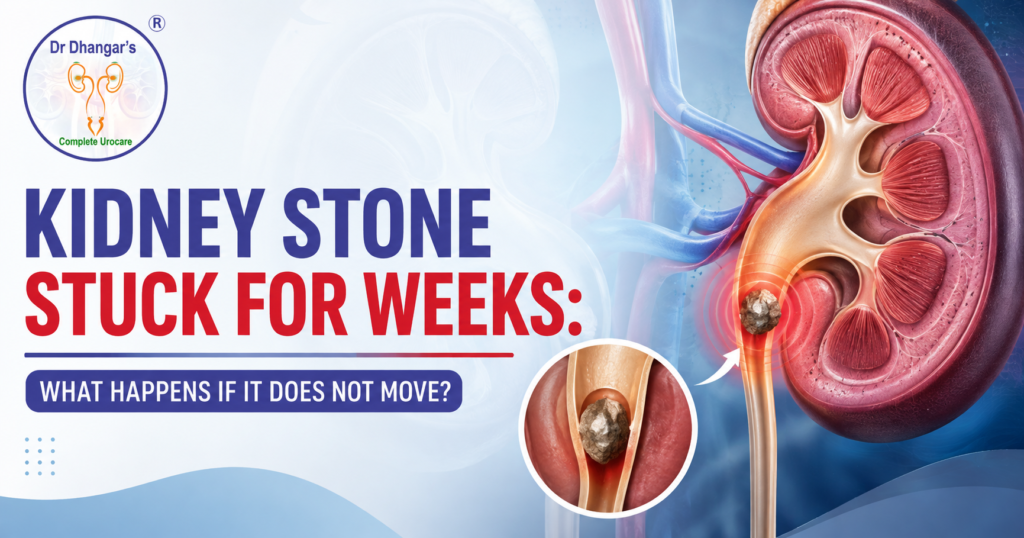
A kidney stone can sometimes pass naturally, particularly when it is small. But what happens when a stone remains stuck for several weeks? This is a common concern for people who continue to experience pain, urinary discomfort or repeated episodes of symptoms while waiting for the stone to pass.
If you are looking for a Urologist in swargate, it is important to understand that waiting is not always the right approach. A Kidney Stone specialist can assess the stone’s size, location and effect on urine flow and determine whether continued observation is appropriate or whether treatment may be needed.
The chances of spontaneous passage depend largely on the stone’s size and location. Current urological guidance indicates that smaller stones, particularly those located closer to the bladder, are more likely to pass naturally. In one set of guideline data, stones smaller than 5 mm in the distal ureter had an estimated 89% chance of spontaneous passage. The average reported time to passage was about 17 days, although individual cases can take longer.
Can a Kidney Stone Really Stay Stuck for Weeks?
Yes. A kidney stone can remain in the urinary tract for weeks, particularly when it becomes lodged in the ureter. The ureter is the narrow tube that carries urine from the kidney to the bladder, and stones can become trapped at naturally narrow points along this passage.
A small stone may eventually move into the bladder and then leave the body through urination. A larger stone, however, may have more difficulty moving through the ureter.
The chances of passage depend on several factors, including:
- Stone size
- Stone location
- Shape of the stone
- Degree of urinary obstruction
- Individual anatomy
Smaller stones generally have a better chance of passing naturally than larger ones. Stones located in the lower part of the ureter also tend to have a higher likelihood of passage than stones located higher up.
This means that two people with stones of the same size may have completely different experiences.
Why Does a Kidney Stone Get Stuck?
The urinary tract is not the same width throughout its length. There are naturally narrow areas where a stone may become lodged.
Once a stone enters the ureter, the muscles surrounding the ureter may contract in an attempt to move it toward the bladder. This can produce the intense, wave-like pain commonly associated with kidney stones.
However, pain does not always tell you exactly where the stone is or whether it has moved.
A person may experience severe pain initially and then feel better even though the stone has not completely passed. This is why follow-up assessment can be important when a stone has previously caused obstruction.
What Happens If the Stone Does Not Move?
The main concern is not simply that the stone remains present. The concern is whether it is interfering with the normal flow of urine.
A stone lodged in the ureter can partially or completely obstruct urine flow. When this happens, pressure can build up inside the urinary system and the kidney may become swollen.
Persistent obstruction can become more concerning when it is accompanied by infection, worsening kidney function or significant symptoms.
Current urological guidance lists persistent obstruction, persistent pain despite appropriate medication, reduced likelihood of spontaneous passage and impaired kidney function among reasons that may justify active stone removal.
This does not mean that every stone remaining for several weeks will cause permanent kidney damage. The severity and duration of obstruction, whether one or both kidneys are affected and the patient’s overall kidney function all matter.
That is why a stone that is not moving should be monitored rather than simply ignored.
Does Pain Mean the Stone Is Still There?
Not necessarily.
Kidney stone pain can come and go. You may experience severe discomfort for several hours and then feel almost normal. This improvement does not always prove that the stone has passed.
In fact, research summarized in urological guidance shows that improvement in symptoms alone does not always confirm that an obstructing stone has cleared. Follow-up imaging may therefore be recommended to confirm passage in appropriate cases.
This is particularly important if your doctor previously identified an obstructing ureteral stone.
If you have not actually seen the stone pass, or if you have a history of obstruction, your doctor may recommend repeat imaging to determine whether the stone is still present.
How Long Should You Wait for a Kidney Stone to Pass?
There is no universal waiting period that applies to everyone.
A small stone may be monitored when:
- There is no infection
- Pain is manageable
- Kidney function is stable
- There is no concerning obstruction
- The stone has a reasonable likelihood of passing
For uncomplicated cases, a period of observation and medical treatment may be appropriate. However, prolonged waiting without follow-up is not advisable.
Guidance commonly considers around four to six weeks an important point for reassessing a ureteral stone that has not passed. If the stone remains present, active treatment may need to be considered depending on the patient’s symptoms, obstruction, kidney function and likelihood of spontaneous passage.
The exact decision should be individualized rather than based solely on the number of days.
When Should You Stop Waiting?
Certain symptoms mean that you should not simply continue waiting for the stone to pass.
Warning Signs That Need Prompt Medical Attention
Seek prompt medical evaluation if you develop:
- Fever or chills along with kidney stone symptoms
- Severe or worsening pain that does not respond adequately to prescribed treatment
- Repeated vomiting or inability to keep fluids down
- Difficulty urinating or a significant reduction in urine
- Known urinary obstruction with worsening symptoms
- Significant weakness or feeling seriously unwell
A particularly important warning sign is fever associated with an obstructing stone.
An infected and obstructed urinary system is a urological emergency. In such circumstances, urgent drainage may be required to restore urine flow, while treatment of the stone itself is generally addressed after the infection has been controlled.
Do not attempt to manage these symptoms at home simply by drinking more water or waiting for the stone to pass.
What Tests Can Tell You If the Stone Is Still Stuck?
Your doctor may recommend urine tests, blood tests and imaging depending on your symptoms and medical history.
A urine test can help identify blood or signs of infection. Blood tests can provide information about kidney function and other factors relevant to treatment.
Imaging is particularly useful because it can show whether the stone is still present, where it is located and whether it is causing obstruction.
Ultrasound may be used to evaluate the kidneys and identify swelling. In appropriate situations, CT imaging can provide more detailed information about stone size, location and urinary obstruction.
The choice of imaging depends on factors such as your symptoms, previous scans, medical history and the clinical situation.
What Happens If the Stone Still Does Not Move?
If the stone remains stuck and has a low likelihood of passing naturally, your doctor may recommend active treatment.
The appropriate option depends on the stone’s size, location, composition, degree of obstruction and your overall health.
Treatment options may include:
- Medical expulsive therapy: Certain medicines may be considered for selected ureteral stones to help facilitate passage. Their usefulness depends on factors such as stone size and location.
- Shock wave lithotripsy: Shock waves are used to break the stone into smaller fragments that can then pass through the urinary tract.
- Ureteroscopy and laser treatment: A small instrument is guided through the urinary tract to reach the stone. The stone can be removed or broken into smaller pieces using specialized equipment.
Urological guidelines recommend selecting treatment based on both stone-related and patient-related factors.
Is Surgery Always Needed for a Stuck Stone?
No.
The word “surgery” can sound alarming, but kidney stone treatment does not always involve traditional open surgery. Many stones can be managed through minimally invasive procedures when active removal is required.
If a stone is small, symptoms are controlled and there is no concerning obstruction or infection, observation may remain an option.
On the other hand, persistent obstruction, uncontrolled pain, infection or impaired kidney function can make active treatment more appropriate.
The objective is not simply to remove a stone as quickly as possible. The aim is to choose an approach that safely protects urinary function while addressing the underlying problem.
What If the Kidney Is Swollen Because of the Stone?
A blocked ureter can prevent urine from draining normally from the kidney and may result in swelling of the urinary collecting system.
The seriousness depends on the degree of obstruction and how long it persists. If obstruction is accompanied by infection, urgent drainage may be necessary.
Doctors may use a ureteral stent or another drainage procedure to restore urine flow. Definitive stone removal may then be performed once the infection has been appropriately treated.
This is why fever, chills and worsening symptoms should never be ignored when you have a known kidney stone.
What Can You Do While Waiting for Treatment?
If your doctor has recommended observation, follow the treatment plan and attend your scheduled follow-up appointments.
Drink fluids according to your doctor’s advice. Drinking excessive quantities of water does not guarantee that a stuck stone will move and may not be appropriate for every patient.
Take prescribed medicines exactly as directed and monitor your symptoms.
If you are advised to collect or strain your urine, doing so may help identify whether the stone has passed.
Most importantly, do not assume the stone is gone simply because the pain has improved.
When Should You See a Kidney Stone Specialist?
A specialist consultation is particularly important if your stone has remained in the ureter for several weeks, your symptoms keep returning or imaging shows that the stone has not moved.
A Kidney Stone specialist can review your imaging, assess whether the urinary system is obstructed and determine whether continued observation is safe.
The goal is to avoid both unnecessary procedures and unnecessarily prolonged waiting. Your stone’s size, location, symptoms and kidney function all need to be considered before deciding on treatment.
Do Not Ignore a Kidney Stone That Is Not Moving
A kidney stone that remains stuck for weeks deserves proper medical follow-up, even if the pain has temporarily improved.
Some stones eventually pass naturally, but others may remain lodged in the ureter and cause persistent obstruction, recurrent pain or infection. The likelihood of natural passage generally decreases as stone size increases, while location also plays an important role.
The good news is that modern treatment offers several options, including medication, shock wave treatment and minimally invasive stone removal procedures.
If your kidney stone has not moved after several weeks, speak with a urology professional rather than continuing to wait without reassessment.
Expert Kidney Stone Care With Dr. Sanjay Dhangar
If you have a kidney stone that has not passed, recurring pain or concerns about urinary obstruction, Dr. Sanjay Dhangar can evaluate your condition and guide you toward an appropriate treatment plan.
If you are searching for a Kidney Stone specialist in swargate, Dr. Sanjay Dhangar can provide professional evaluation and guidance for kidney stones, urinary obstruction and related urological conditions.
Timely assessment can help determine whether your stone is likely to pass naturally or whether active treatment may be more appropriate. Do not ignore persistent symptoms simply because the pain temporarily improves.
Hashtags
#KidneyStone #KidneyStoneTreatment #KidneyStoneSpecialist #Urology #Urologist #KidneyHealth #StoneRemoval #LaserKidneyStoneTreatment #UrinaryHealth